Lyngsjön Lake Fieldwork
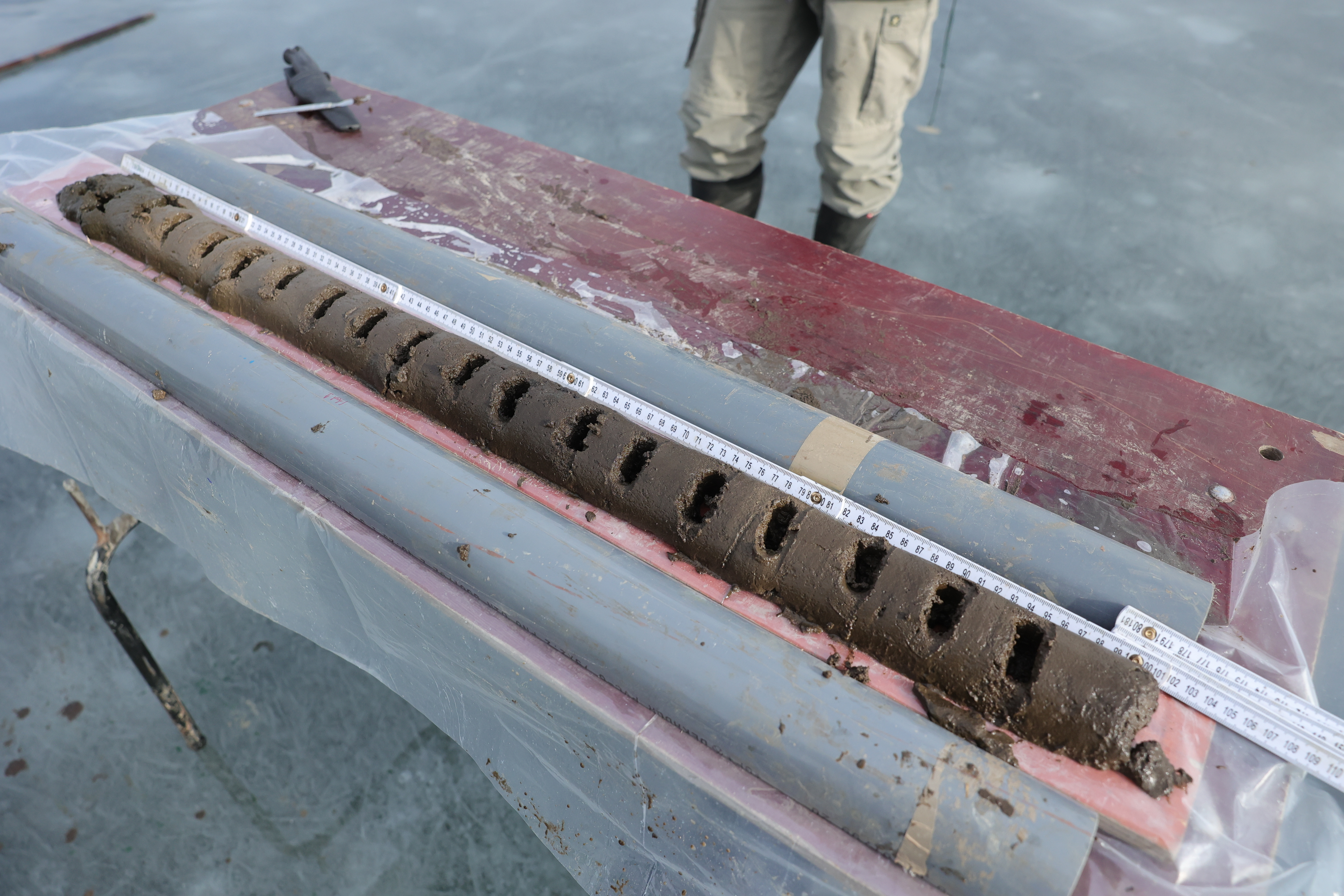
Lyngsjön Lake is the direct visit record behind the corresponding fieldwork feature in the Nordic Evidence Atlas. The evidence supports a narrow claim: a visit was documented at the stated coordinates on 26 February 2026, and the repository preserves selected media from that visit.
Visit Record
| Field | Value |
|---|---|
| lake | Lyngsjön Lake |
| country | Sweden |
| regional setting | southwest of Kristianstad |
| field date | 2026-02-26 |
| atlas coordinates | 55.9319529, 14.0659044 |
| atlas layer | Fieldwork documentation |
| atlas feature | Lyngsjön Lake field sampling |
The coordinate above belongs to the visit feature. The Sweden lake-priority
registry separately represents Lyngsjön as svar-lakes:620184-139120 at a
polygon representative point. The two coordinates are close, but they are not
interchangeable: one locates this dated field record and the other identifies
the mapped water body used by the ranking system.
Atlas Context
The surrounding atlas contains pollen, archaeology, hydrography, and ancient-DNA context. Those layers explain why the landscape supports cross-domain investigation; they do not become direct evidence for the visit, and the visit does not validate their scientific claims. Each layer retains its own provenance, spatial precision, and temporal semantics.
flowchart LR
    Visit["Lyngsjön visit"] --> Record["date, coordinates, and media"]
    Record --> Claim["documented visit claim"]
    Atlas["separately governed atlas layers"] --> Comparison["contextual comparison"]
    Claim --> Comparison
    Comparison --> Questions["follow-up questions"]
The diagram has no shortcut from atlas context to the visit claim. The visit is supported by its own record and media; contextual comparison begins only after that narrow claim is established.
Evidence Route
flowchart LR
    AtlasFeature["fieldwork atlas feature"] --> VisitPage["visit identity and limits"]
    VisitPage --> Photo["checked-in photograph"]
    VisitPage --> Video["checked-in video"]
    VisitPage -. lake identity link .-> Registry["SVAR lake 620184-139120"]
    Registry --> Ranking["Sweden lake-priority scenarios"]
The solid path audits the visit. The dotted link enables comparison with the lake registry without claiming that the registry proves the visit or that the visit validates the ranking.
Repository Evidence
- photo:
docs/gallery/2026-02-26-data-collection.JPG - video:
docs/gallery/2026-02-26-data-collection.mp4 - Nordic evidence surface:
docs/report/regions/nordic/nordic_map.html - world parent surface:
docs/report/world/world_map.html
Open the Nordic evidence surface Open the world parent surface Open the field video Open the field photo Compare the lake-priority record
Supported Interpretation
| Supported | Not supported by this record |
|---|---|
| the published feature corresponds to a dated visit | representative field coverage |
| the selected photo and video are checked-in visit media | lake-wide sediment or bathymetric conditions |
| the location can be compared with separately governed atlas context | causal or temporal association with nearby records |
| one atlas claim can be inspected beyond its marker | regional sampling readiness |
Only one photograph and one video are published. Their role is evidence for the visit claim, not comprehensive documentation of conditions at the lake.
The map, page, photograph, and video are complementary representations of one evidence packet. Repetition across those surfaces does not create four independent observations. A reviewer should count the visit once and use the media to inspect the bounded claim attached to it.
Relate The Visit To A Ranking Revision
The visit and lake-priority record can be connected only after fixing both identities:
| Side of the relation | Required identity |
|---|---|
| fieldwork | Lyngsjön visit feature, 2026-02-26 event date, visit coordinate, and media packet |
| lake registry | svar-lakes:620184-139120, governed polygon, and representative-point method |
| ranking | product version, candidate population, scenario or aggregate definition, model weights, and evidence revision |
That relation permits a reader to ask what ranking context existed for the same governed lake. It does not show that the visit was caused by the rank, that the rank predicted conditions visible in the media, or that the visit validated the ranking model. Those claims would require a dated selection decision and a field protocol that measures model-relevant outcomes.
If the registry geometry or ranking later changes, retain the historical visit and prior ranking identities. Recompute the relation rather than moving the visit coordinate or rewriting what the earlier model ranked.
Reading The Media
The photograph and video document selected views during a winter visit. They support statements about what is visible in those frames and the occurrence of the recorded visit. They do not establish conditions outside the captured view, persistence across seasons, lake-wide access, water depth, sediment structure, or the feasibility of a sampling design.
The atlas coordinates locate the published visit feature. They are not a coring station, transect, shoreline-access guarantee, or substitute for a field protocol. Any later sampling record requires its own coordinates, methods, dates, permissions, observations, and media lineage.
Evidence Boundary
This record does not establish pollen stratigraphy, archaeological chronology, ancient-DNA presence, coring suitability, access, permits, or the representativeness of Lyngsjön for a wider region. Those questions require their own sources, methods, and review decisions.
A stronger field assessment would add repeated or spatially distributed observations, bathymetry and basin evidence, access and permission records, seasonal context, and an explicit sampling protocol. Until then, the durable claim remains the documented visit described above.